
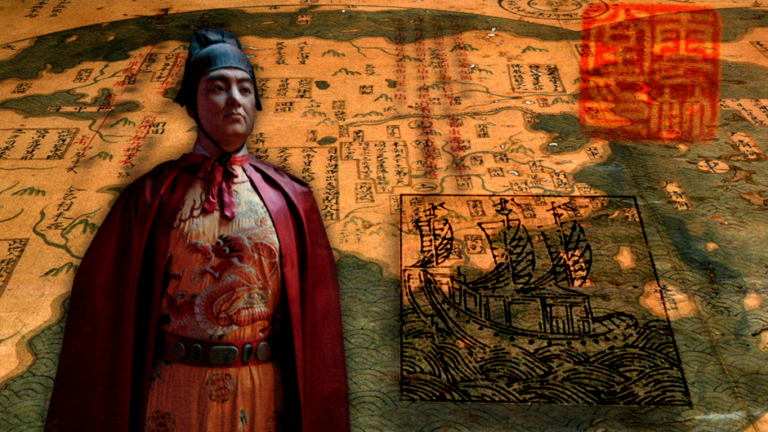
Consumption of edible bird’s nest could be traced back to 7th century from China during Tang Dynasty (618-907A.D.). According to historical data, Admiral Cheng Ho’s (郑和) voyages to the Western Seas, the ocean fleet encountered a severe storm at sea and sought refuge on a deserted island in the Malay Archipelago. They faced a shortage of food. While exploring the island, they accidentally discovered white objects on the steep cliffs, with small swiftlets flying around them. Cheng Ho ordered his subordinates to gather these objects, which turned out to be edible bird’s nests. After cleaning them, they stewed the nests in clear water to alleviate their hunger. After a few days, the crew members were full of energy and vitality. Cheng Ho realized the benefits of consuming bird’s nests and introduced the bird nests to the Ming Emperor.
In ancient times, edible bird’s nests were considered a premium supplement for the emperor’s family and court officials. According to records from the Qing Dynasty, among the dozens of “session menus” recorded in the “Tiao Ding Ji” (调鼎集) in the Kangxi year of the Qing Dynasty, bird’s nest ranked first. Emperor Qianlong(乾隆帝), during his trips to southern regions, would have a bowl of bird’s nest congee every morning.
In Qing Dynasty, Zhao Xuemin’s(赵学敏) “Chinese Medicine Book” (本草纲目拾遗)states: “Edible bird’s nest nourishes the lung, dissolves phlegm, stops coughing, and effectively nourishes and detox the body. It is an elixir for nutrient deficiencies and treating elderly weakness. For all diseases caused by lung deficiency and inability to recover, using this (bird’s nest) can cure them.”